
Gender Justice and Statelessness
Gender discrimination in nationality laws is a primary driver of statelessness. Learn how the Global Statelessness Fund and our grantee partners are responding to dismantle these inequalities.
Nationality is nearly always the gateway through which people have rights recognized and access to services. In most countries, women and men now enjoy equal rights to acquire, retain, change and pass on their nationality. Yet in at least 24 countries, mothers cannot confer their nationality on their children on an equal basis with fathers, and in more than 40 countries, women face unequal rights to confer nationality on a foreign spouse, or to acquire, change or retain their own nationality.
Gender-discriminatory nationality laws and accompanying patriarchal practices (such as barriers to registering a child’s birth in the mother’s name, including in situations where fathers are absent or the birth is a result of sexual violence) are among the primary drivers of statelessness—an extreme form of exclusion affecting at least 15 million people worldwide —and directly contravene international law, including Article 9 of CEDAW, which explicitly guarantees women’s equal nationality rights.
The consequences fall hardest on women and children – heightening risks of gender-based violence, family separation, human trafficking, and limiting access to rights and access to justice.
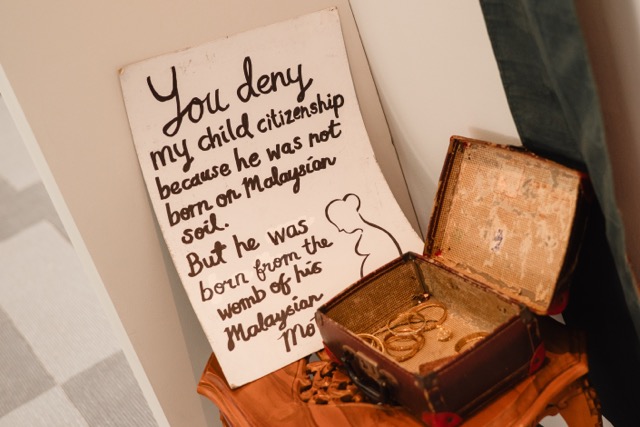
Equal nationality rights as a gender justice issue
Gender discrimination in nationality law is both a distinct women’s rights violation and a root cause of many issues that gender and women’s rights funders already prioritise. Unequal nationality rights can trap women in abusive marriages, since leaving may mean losing residency status, custody or their children’s nationality. They are also linked to higher rates of exploitation and child marriage, as families may see early marriage as a route to security when a daughter cannot secure her own status. When women cannot pass nationality to their children or confer it on a spouse, family unity, economic security, and children’s access to education and healthcare all suffer. Achieving Sustainable Development Goal 5 on gender equality is not possible while these laws remain on the books in dozens of countries.
Despite its scale and clear rights implications, gender discrimination in nationality law remains a blind spot for many funders. Efforts to reform discriminatory laws and practices sit at the intersection of migration, justice, children’s and women’s rights, and can fall between standard donor portfolios. As a result, women and women-led organisations most affected are rarely resourced to lead efforts for change.
Yet this is a solvable problem, ripe for systems-level investment by strategic philanthropy. Recent nationality law reforms in Sierra Leone, Madagascar, and Liberia show that change is achievable, and the work lead by our grantee partners show that when women and impacted person-led groups are central to strategies, significant progress can be made.
Our response
The Global Statelessness Fund is led by a majority-women Steering Group—spanning impacted activists, civil society organisations, and donors—and staffed entirely by women. It emerged from clear evidence in the field: donor investment in women and impacted person-led groups was already driving real progress, while prominent actors acknowledged that top-down efforts were having minimal impact.
These realisations led to a concerted effort to catalyse scaled funding for stateless-led groups and their allies, drawing on best practices from other movement funders and participatory grantmakers to build an innovative and trust-based approach. This includes dedicated support for women-led and gender-justice organisations campaigning for equal nationality rights.
Among our grantee partners are 25 women-led organizations and a further 14 organisations working to address gender discrimination in nationality laws. These groups include Family Frontiers, which has successfully advocated for the amendment of gender-discriminatory nationality regulations and achieved a landmark court victory in 2025, granting Malaysian mothers the right to pass citizenship to their overseas-born children and the Citizenship Affected People’s Network which has organized a nationwide campaign to amend the 2015 Constitution to allow women to pass on citizenship to their children in Nepal.
The Global Statelessness Fund is an initiative co-created by stateless people, civil society organizations, and donors. We believe that the most effective responses to statelessness are those led by people with lived experience. The Fund seeks to strengthen the individual and collective action of stateless people and their partners through participatory, flexible, and transformative grantmaking.