
Forced Migration and Statelessness
Learn about the close causal links between forced migration and statelessness, and the efforts to realize the right to nationality and protection for displaced communities.
Nationality is nearly always the gateway through which people can access services and rights. Statelessness – being denied any nationality – is an extreme form of exclusion and a growing global problem, made worse by increasing authoritarianism, racism, and the erosion of democracy. Stateless people are often persecuted and routinely denied education, healthcare, housing, employment, documentation, free movement, political participation, and access to justice. Increasingly hostile political environments exacerbate the threats to stateless people and increase the risk of statelessness among marginalized groups.
There are at least 15 million stateless people across all regions of the world. Tens of millions of others also live with precarious and unequal nationality, when for example, states repeatedly review the citizenship status of minority communities or deny women equal rights to transmit nationality to their children (as is the case in 24 countries).
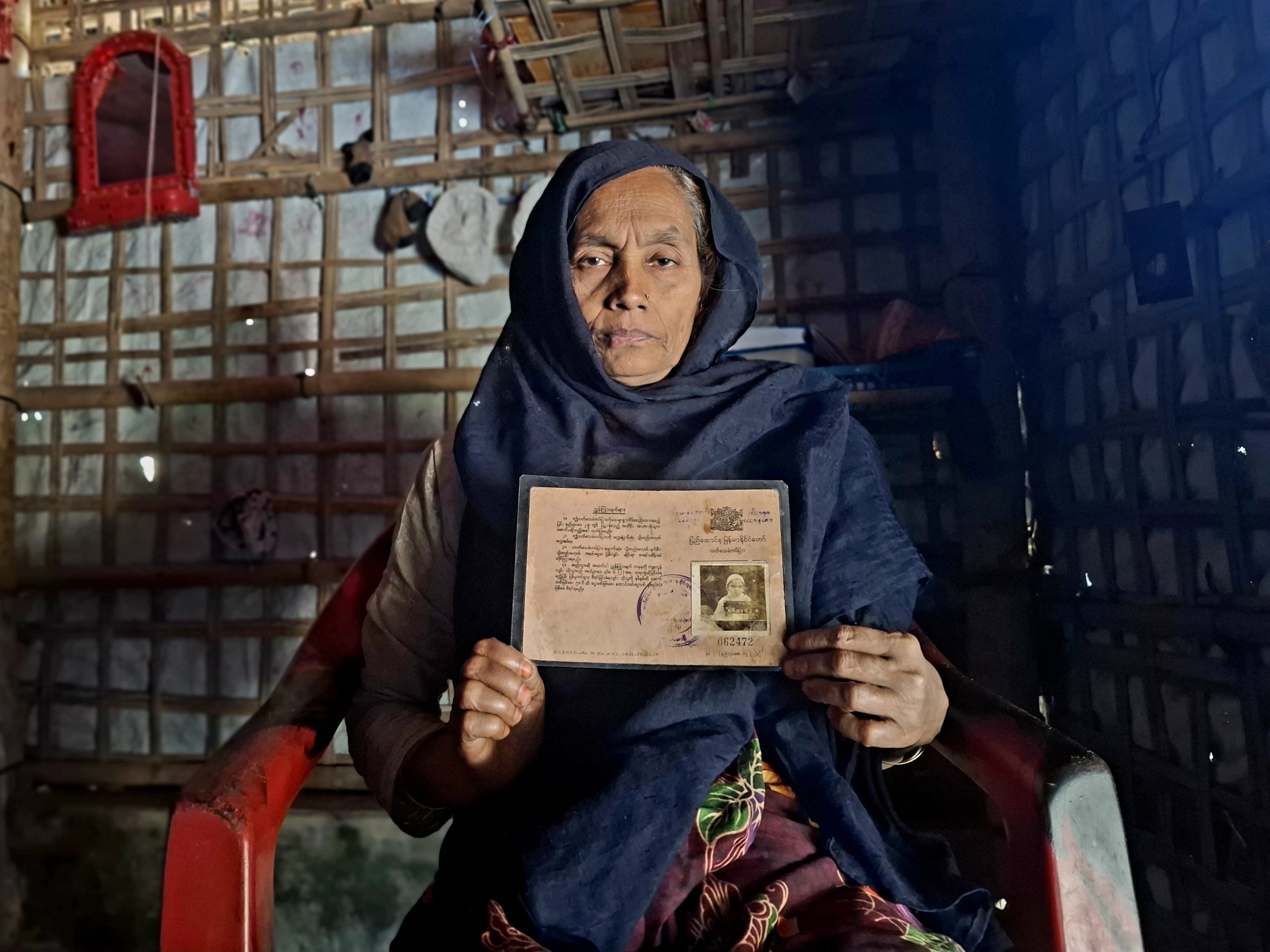
The nexus between forced migration and statelessness
The discrimination faced by stateless people can be so severe that it amounts to persecution, it can put them at the centre of local tensions or internal conflict, and can force people to flee their homes and cross international borders. Stateless people are uniquely at risk of forced displacement in the context of serious human rights abuses, collective expulsions, and even natural resource management (for instance, due to lack of land rights).
In situations where a stateless person is forced to flee their country to seek asylum abroad, the fact that they have no nationality can make the pursuit of international protection more challenging. Without a travel document – or perhaps even any identity document at all – stateless people may be forced to use illicit means to cross international borders, making them more vulnerable to human trafficking. Upon arrival, it may be more difficult to access international protection and assistance, because a stateless person might not be able to ‘show’ where they are from and this may affect the outcome of their asylum claim. Statelessness can also obstruct access to naturalisation, family reunification and resettlement programs, making durable solutions harder to achieve.
Despite the clear causal links between forced migration and displacement, its cross-cutting rights implications and significant scale, the issue remains largely invisible and underfunded. Without dedicated resourcing and opportunities, stateless communities are consistently overlooked. Stateless people themselves are often unseen, lacking agency and recognition. Statelessness is rarely the focus of donor urgency. Its complexity can defy easy categorisation into standard donor portfolios, and it can get lost in an assumption that it’ll be addressed under broad forced displacement funding. Impacted people leading initiatives on statelessness have made clear that this assumption falls short – displacement funding often doesn’t reach stateless communities.
There is an opportunity for forced displacement funders to focus resources on a solvable driver and consequence of forced migration. Statelessness is ripe for systems-level investment by strategic philanthropy and when stateless-led groups are central to strategies, significant progress can be made.
How are our grantee partners responding?
While tackling statelessness and the problems it gives rise to requires sustained, long-term effort, GSF grantees have already proven the basic premise behind the fund. Namely, that self-organised groups of stateless people know best how to address the problems they face, and when properly resourced and networked, they can achieve meaningful, often replicable change. We have seen tangible policy and practice gains achieved by grantees through strategies of mobilisation, advocacy, community engagement, and service provision.
Examples of impact and stepping stones to change include:
- Access to nationality for refugee children and spouses in Kenya: In Kenya, children of mixed families—born to one refugee and one Kenyan parent—were traditionally registered as refugees at birth. Refugee spouses of Kenyan citizens had no pathway to naturalization. Through two successful strategic litigation cases brought by Haki na Sheria—informed by collaborative advocacy and community mobilisation among diverse impacted communities in the country—30,000 Kenyan Somalis previously registered as refugees will be granted legal documentation, refugees born to mixed unions will be recognized as citizens, and refugee spouses of Kenyan citizens can use refugee documentation as proof of lawful permanent residency when applying for citizenship.
- Lived experience as a driving force for change in the Netherlands: The Stateless Rights Collective are an unregistered community group of stateless people who have sought asylum in the Netherlands. When they came together as a community and exchanged experiences, it became clear that the complexities of their situations, as stateless persons, and the lack of understanding of statelessness among lawyers, judges, decision-makers and the authorities were resulting in long delays and negative outcomes to asylum claims. The group have taken a multi-pronged approach to change. They are ensuring that affected people understand their situation as stateless people, not only as ‘asylum seekers’. This helps them assert their rights. They train lawyers and raise awareness with judges to ensure that legal expertise on statelessness exists. The collective has seen an increase in recognition rates among stateless community members, informing and motivating their high-level advocacy to drive long-term change.
- Research, arts and advocacy in Cox’s Bazar: A collective of passionate Rohingya photographers and artists based in Cox’s Bazar, Bangladesh – Rohingyatographer – produced ‘The Invisible Crisis of the Rohingya Mind’. This powerful visual investigation explores the psychological landscape of Rohingya life in Cox’s Bazar. Drawing on documentary photography, community interviews, field observations, desk research, and a community-led survey, it examines how displacement, statelessness, restricted movement, and prolonged uncertainty shape everyday experience. The collective uses its research and art to inform its extensive advocacy on Rohingya community needs and priorities in Bangladesh and beyond.
The Global Statelessness Fund is an initiative co-created by stateless people, civil society organizations, and donors. We believe that the most effective responses to statelessness are those led by people with lived experience. The Fund seeks to strengthen the individual and collective action of stateless people and their partners through participatory, flexible, and transformative grantmaking.