
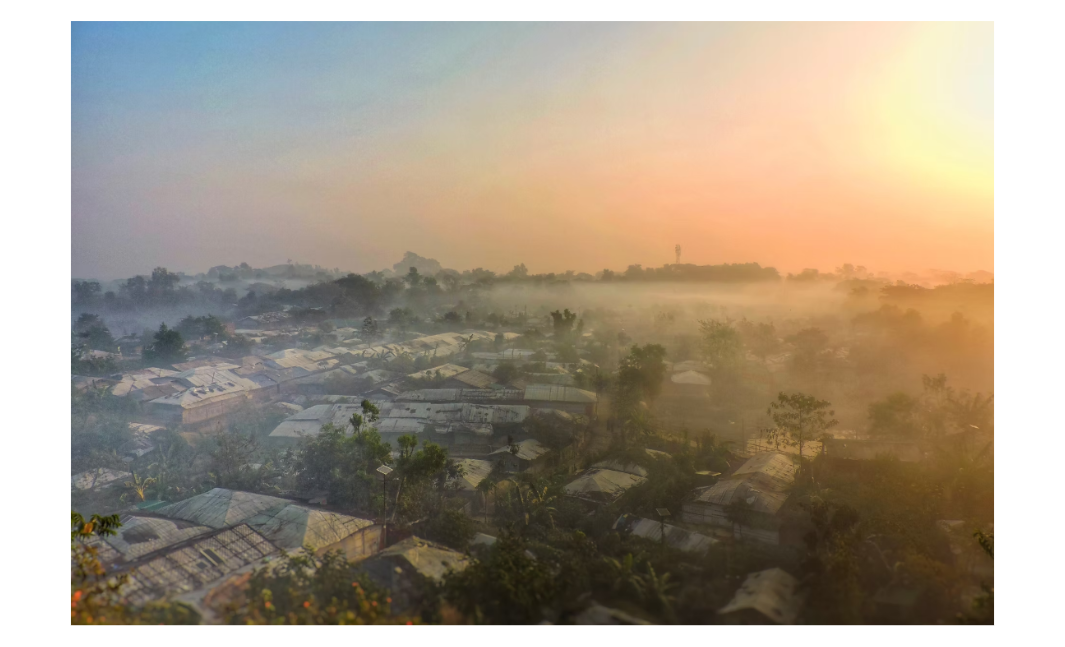
Global Statelessness Fund grantee partner Rohingyatographer has published The Invisible Crisis of the Rohingya Mind, a powerful visual investigation exploring how prolonged statelessness, displacement and uncertainty shape the psychological wellbeing of Rohingya communities living in Cox’s Bazar, Bangladesh.
The investigation brings together documentary photography, community interviews, field observations and a community-led wellbeing survey involving 247 Rohingya respondents.
Rather than looking at mental health solely through the lens of past violence and displacement, the research draws attention to the pressures of the present. Respondents spoke about restrictions on movement, limited access to education and employment, lack of citizenship and documentation, family separation and the persistent uncertainty of not knowing what the future holds.
The findings highlight an important but often overlooked dimension of statelessness: its impact extends far beyond legal status. When people are denied recognition, rights and opportunities, the consequences can shape their sense of security, agency and hope for the future. Rohingyatographer’s research shows how emotional wellbeing is closely connected to whether people are able to study, work, move freely, reunite with family and imagine a life beyond displacement.
At the same time, the investigation resists portraying Rohingya communities only through suffering. Through photographs, testimonies, drawings and imagined futures, Rohingya contributors document not only distress and uncertainty, but also resilience, creativity and aspirations for lives rooted in citizenship, safety and belonging.
For the Global Statelessness Fund, supporting community-led organisations such as Rohingyatographer is also about protecting space for creativity, expression and self-representation. In contexts where freedom, movement and opportunity are heavily constrained, photography, writing and storytelling can become powerful ways to reclaim voice, preserve identity and imagine possibilities beyond statelessness. By supporting their work, GSF helps create space for affected communities not only to document injustice, but to express themselves on their own terms and shape how their stories are seen and understood.
About Rohingyatographer
Founded in 2021, Rohingyatographer is a stateless refugee-led collective based in Cox’s Bazar, Bangladesh. Led by Rohingya photographers and storytellers, the collective works from within the community to reclaim Rohingya narratives through self-representation, using photography, writing, curation and media training to document lived experiences, preserve culture and strengthen the capacities of Rohingya youth.
Explore The Invisible Crisis of the Rohingya Mind and learn more about the work of Rohingyatographer.