
Introduction to Statelessness
Nationality = A human right
Statelessness = The most acute violation of this right
Article 15 of the Universal Declaration of Human Rights states that everyone has the right to a nationality and that no one shall be arbitrarily deprived of their nationality. Yet, there are more than 15 million people who face a life without a nationality, and tens of millions more whose nationality is under threat. Conservative estimates suggest that a child is born stateless every ten minutes.
Nationality is generally the gateway through which people access rights and services. It is also an important part of a person’s identity, offering a place to call home and a community to belong to. Stateless people are routinely denied their rights to safety, education, healthcare, housing, employment, social protection, family life, documentation, free movement, and to have their voices heard. Protecting the right to a nationality is key to realising other human rights, reducing poverty, and countering discrimination and intolerance.
How does a person become stateless?
Statelessness is most often caused by discrimination on grounds such as race, ethnicity, gender, disability, and socio-economic status.
- An estimated 75% of stateless people belong to minority communities, with the largest populations being those disenfranchised due to their identity.
- In 24 countries, including the Bahamas, Lebanon, Nepal, and Somalia, women cannot pass their nationality to their child on an equal basis to men. This can leave children stateless.
- The redrawing of borders and state succession can lead to mass statelessness. The collapse of the Soviet Union and decolonisation both led to mass statelessness, mostly of minority groups.
- Statelessness can be the result of citizenship stripping, in the name of national security, often targeting political dissidents and human rights defenders.
The problem, fuelled by authoritarianism, xenophobia, conflict, and displacement, is growing. In most years, more children are born into statelessness than stateless people who receive a nationality.
Where does statelessness occur?
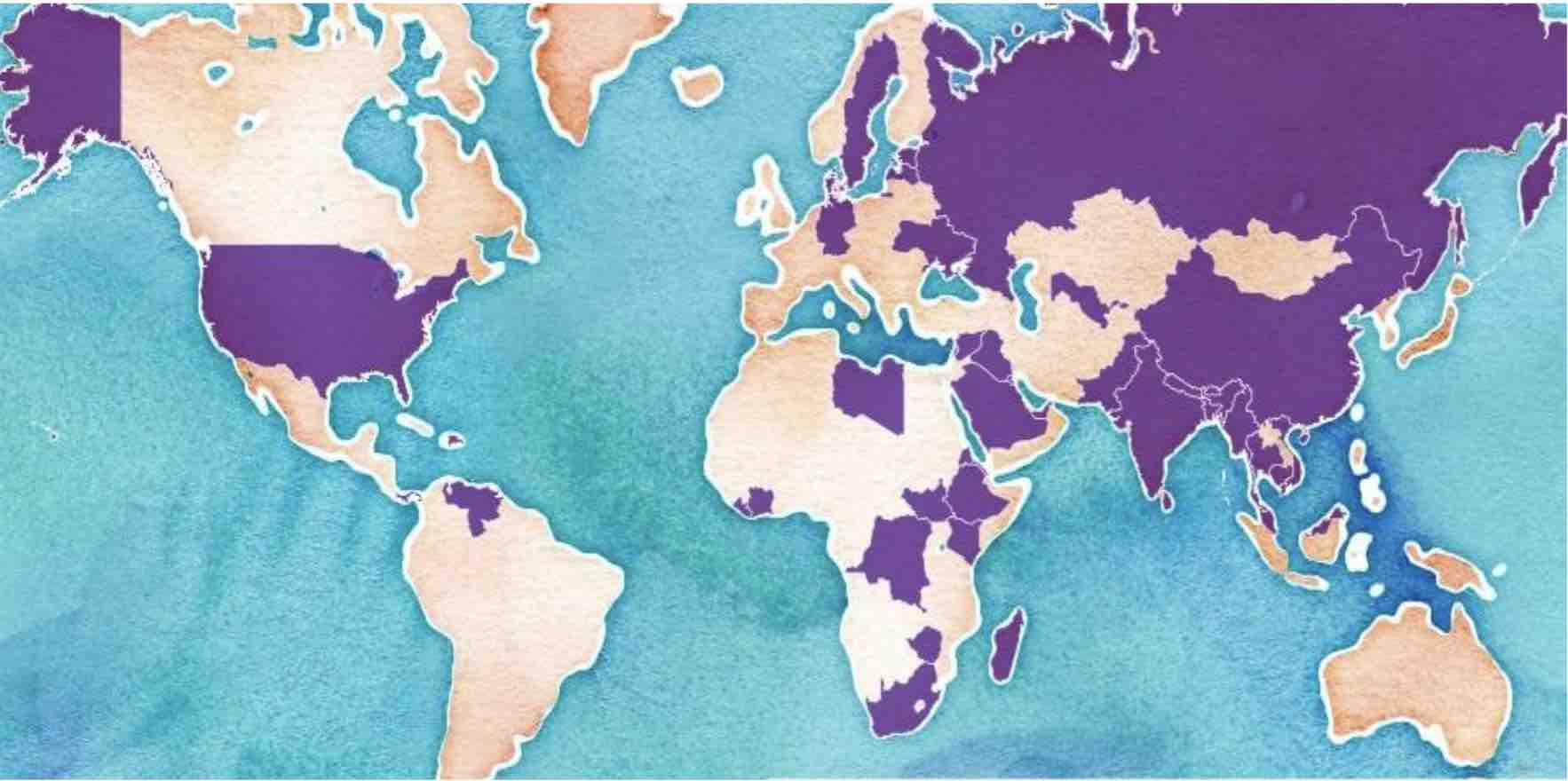
Statelessness occurs in all regions of the world. The countries in purple on the map have significant stateless populations. These include Côte d’Ivoire, the Dominican Republic, Estonia, Ethiopia, Iraq, Kenya, Latvia, Lebanon, Madagascar, Malaysia, Myanmar, Nepal, Russia, Saudi Arabia, South Africa, Sweden, Syria, Thailand, Ukraine, and the USA.
Among the groups most affected by statelessness are:
- Bidoon, especially in Kuwait, the UAE, and Iraq
- Palestinians
- Nubians, Pemba, and other East African tribes
- Former Soviet citizens
- Bangladeshi Urdu speakers, Pakistani Bengalis
- Kurds in Syria and Iraq
- Stateless migrants in Europe and USA
- Rohingya in Myanmar and elsewhere
- Dominicans of Haitian descent
- Hill tribes in Northern Thailand
- Historic migrants in Côte d’Ivoire
- Roma, especially in the former Yugoslavia and Italy
- Bajau Laut and other minorities in Malaysia
- Denationalized residents of Assam, India
Statelessness remains an under-addressed issue, falling between the gaps of more established donor priorities. However, statelessness intersects with many (if not all) of the biggest global challenges we face.
- Human rights: Caused by deprivation of the right to nationality, statelessness is the basis for multiple other rights deprivations due to structural discrimination and exclusion.
- Development: Stateless people are more likely to be left behind, with few political incentives (and often strong disincentives) for policymakers to invest in infrastructure for stateless communities.
- Migration: Many stateless people are forcibly displaced, and many displaced people become stateless.
- Discrimination: An estimated 75% of stateless people belong to minority communities. Disabled people, LGBTQI+ people and those of migrant heritage are disproportionately impacted.
- Democracy and rule of law: Citizenship stripping (leading to statelessness) is a crude technology of disenfranchisement often used by authoritarian regimes, which undermines equal citizenship.
- Peace and conflict: Statelessness can be caused by conflicts and stateless communities are often trapped in conflict settings as they cannot move freely in their own country or safely cross borders.
- Digitalization and data governance: The growing digitalisation of identity systems is perpetuating exclusion amongst minority groups, while heightening the cost of such exclusion.
- Women’s rights: Stateless women face additional marginalisation and have less protection from gender-based violence (GBV) due to fears of accessing the authorities; in 24 countries women cannot pass their nationality to their child on an equal basis as men, which can leave children stateless; gender discrimination in nationality laws perpetuates root causes of GBV, while rendering affected women and girls at higher risk of human trafficking and early/forced marriage.
- Child rights: Stateless children are deprived of safe and secure childhoods and often denied equal access to education and the ability to reach their full potential.
- Access to justice: The rights of stateless people are often violated with impunity, as statelessness serves as an often insurmountable barrier to access to justice.
- Climate justice: Many stateless communities are overexposed to the impacts of climate change, while ’sinking islands’ can create new statelessness situations en masse.
The Global Statelessness Fund is an initiative co-created by stateless people, civil society organizations, and donors. We believe that the most effective responses to statelessness are those led by people with lived experience. The Fund seeks to strengthen the individual and collective action of stateless people and their partners through participatory, flexible, and transformative grantmaking.
We are seeking to build new relationships with those in the philanthropic sector. If you are interested in partnering with the Global Statelessness Fund, please get in touch with us at [email protected].