
Rohingyatographer recently published a long-form investigative photo-essay examining the historical roots of Rohingya statelessness. The article challenges the common narrative that displacement began in 2017, documenting instead a century of recurring exclusion and forced migration.
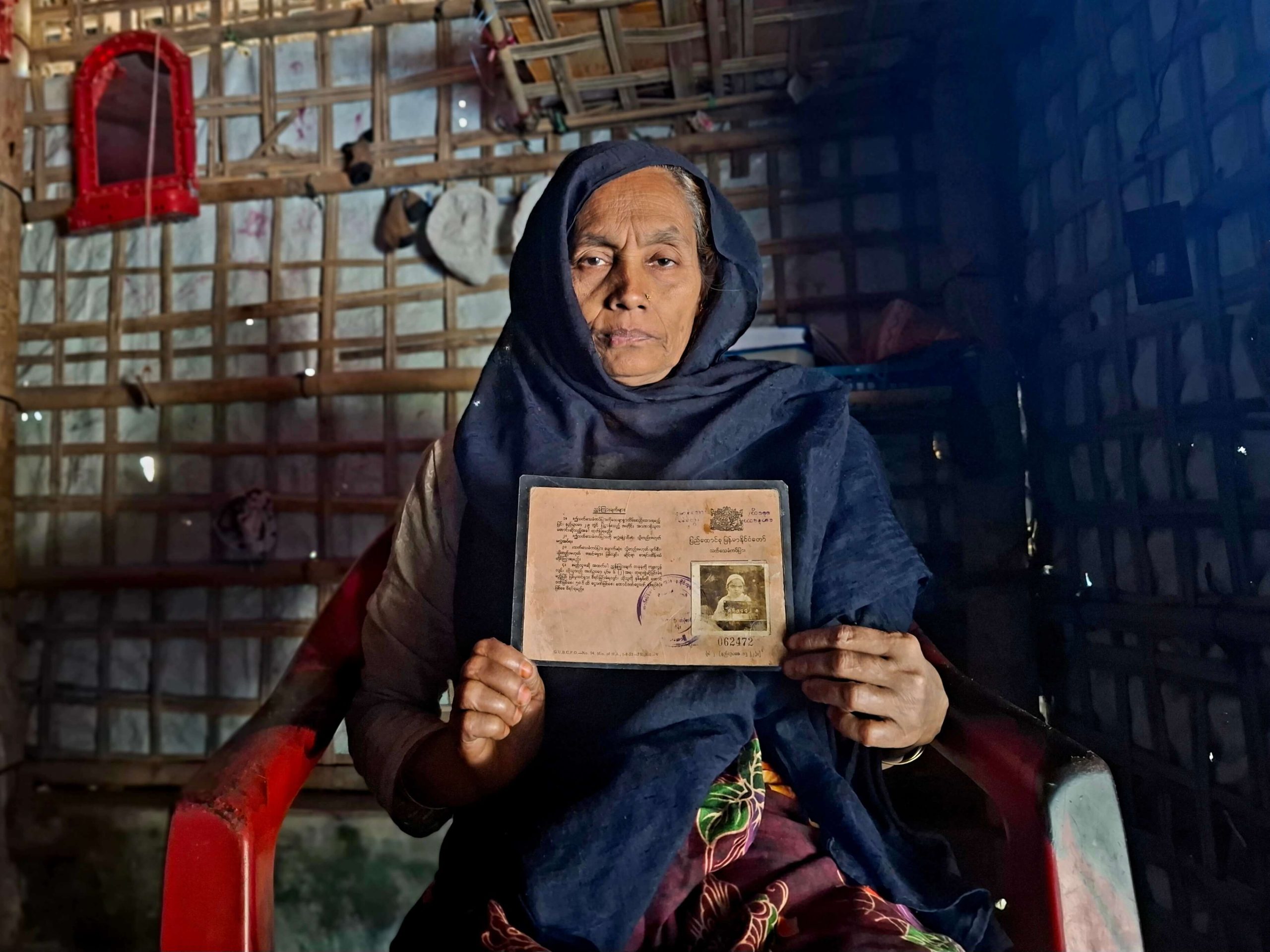
Through the photography and reporting of Azim Ullah, the piece profiles seven Rohingya elders—Ali Akbar, Lalmia, Hassan Ahmed, Sha Alom, Roshida Begum, Goramia, and Nurul Hoque—whose lives reflect multiple waves of displacement. Their testimonies are combined with archival research on legal and administrative measures, including the 1952 National Registration Cards and the 1982 Citizenship Law.
The article also documents identity papers preserved by families across generations, fragile records that represent proof of ancestry and belonging in Arakan. The project demonstrates how community-led documentation can examine the legal mechanics of statelessness through lived experience.
The article can be accessed here.
Rohingyatographer is a grantee partner of the Global Statelessness Fund. As a collective of award-winning Rohingya photographers, they document life in the world’s largest refugee camp. Learn more about their work on their website.